AIoT-Enabled Operational Intelligence for Vehicle Remanufacturing
Workforce Visibility, Asset Intelligence & Production Control — AIoT-Powered for Remanufacturing & Refurbishment Floors across North America.
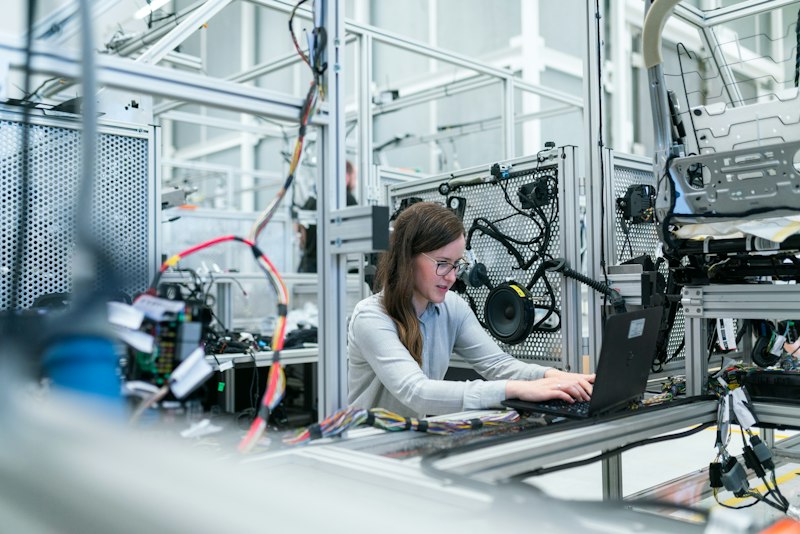

Industry Overview
Built for the Complexity of Remanufacturing Operations
Vehicle remanufacturing and refurbishment operations run under conditions that demand precise, real-time coordination across technicians, core inventory, production tooling, rebuild fixtures, and multi-stage assembly workflows. Unlike greenfield OEM manufacturing, remanufacturing facilities process high variability in returned cores, manage concurrent disassembly, reconditioning, and reassembly sequences, and carry compliance obligations tied to warranty revalidation, end-of-life traceability, and environmental handling regulations.
Remantra AI delivers an AIoT platform purpose-engineered for these environments — developed within Aperture Venture Studio with the support of GAO, an organization with two decades of IoT deployment experience across thousands of industrial customers and projects.
Key Challenges
Why Remanufacturing Demands Specialized Intelligence
These operational characteristics make real-time visibility across personnel, assets, and inventory not an operational convenience — but a production-critical requirement.
Workforce Coordination Complexity
Platform-certified technicians must be aligned to specific rebuild sequences across multiple bays simultaneously. Without real-time visibility, misalignment causes bay idle periods, cycle time variance, and throughput degradation.
Controlled Zone Access & EHS Compliance
Chemical cleaning zones, solvent degreasing stations, and thermal processing areas mandate strict access controls based on certifications, PPE compliance, and shift schedules. Manual enforcement creates dangerous compliance gaps.
Core Return Variability & Receiving Bottlenecks
Returned cores arrive in mixed condition states across multiple vehicle platforms. Manual grading and routing decisions create queue backlogs that delay production scheduling and reduce rebuild throughput during peak demand cycles.
Calibration Instrument Control
Calibrated instruments shared across bays — torque wrenches, bore gauges, pressure test rigs — are routinely misplaced and used beyond calibration expiry, creating IATF 16949 non-conformances and rebuild quality risk.
Multi-Stage Inventory Visibility Gaps
Active inventory spans inbound cores, sub-assembly staging, reconditioned parts, service replacement components, and finished units — each in distinct lifecycle stages. Without automation, ERP records lag reality by hours, causing scheduling failures.
Warranty Traceability Documentation
Remanufactured units require complete traceability records linking core origin, teardown findings, parts consumption, inspection results, and test bench data. Manual compilation is time-consuming, error-prone, and creates warranty claim delays.
Platform Capabilities
Six Integrated AIoT Capability Modules
A unified operational intelligence layer combining AI-driven analytics, industrial-grade edge processing, and field-proven IoT connectivity.
AI for Workforce Tracking & Access Control
Operational Intelligence Across the Remanufacturing Floor
Remanufacturing and automotive refurbishment facilities are operationally segmented environments. Core disassembly zones, engine and transmission rebuild bays, cylinder head reconditioning areas, electrical component testing stations, aqueous parts cleaning sections, painting and coating booths, and finished goods staging areas each carry distinct access requirements, workforce composition profiles, and workflow rhythms. Remantra AI's AI layer is structured to interpret this operational segmentation and deliver actionable intelligence at each production tier.
Deployable AI-driven capabilities supporting workforce tracking and access management in remanufacturing and refurbishment environments include:
- Zone-level occupancy analytics with real-time density mapping across disassembly, rebuild, reconditioning, inspection, and staging areas
- Technician workflow sequencing models correlating personnel movement with active work order assignments
- Predictive congestion and throughput risk alerts for high-activity zones during peak shift periods
- Emergency mustering and headcount verification with automated reporting to safety management systems
- Workforce productivity analytics derived from zone dwell patterns and cross-bay coordination metrics
AI For Asset Tracking & Parts Inventory Control
Analytical Intelligence Across Equipment, Tooling, and Multi-Stage Inventory
Asset and inventory management in remanufacturing operations presents challenges that are structurally different from those encountered in new-parts manufacturing or aftermarket distribution. Production assets span mobile rebuild fixtures, engine stand and transmission jack equipment, precision torque tooling, bore gauges and dimensional measurement instruments, electrical and hydraulic test benches, and calibration-critical inspection gauges, many of which are shared across bays, subject to regulatory calibration intervals, and actively deployed on multiple vehicle platforms simultaneously.
Deployable AI-driven capabilities for asset tracking and inventory control in vehicle remanufacturing and refurbishment facilities include:
- Shift-aware and certification-aware authorization models that dynamically adjust zone access permissions
- PPE equipment registration verification at controlled entry points
- Behavior-based access anomaly detection with timestamped, tamper-evident audit logging
- Real-time alerting for credential sharing, tailgating, and off-shift intrusions
- Automated audit trail generation aligned to ISO 9001, IATF 16949, and EHS regulatory requirements
IoT for Workforce Tracking & Access Control
Hardware Deployment in Industrial Remanufacturing Environments
Remanufacturing and automotive refurbishment facilities present IoT hardware deployment conditions that differ materially from controlled electronics manufacturing or automated OEM assembly environments. High-bay ceilings in engine block and transmission rebuild areas, dense metallic structural elements in core receiving and disassembly zones, mobile overhead crane and forklift traffic, RF-absorbing characteristics of aqueous cleaning tanks and thermal oven enclosures, and variable electromagnetic interference from electrical test bench equipment all directly influence IoT hardware selection, reader placement strategy, and signal management configuration.
IoT Device Management Software
Remantra AI's IoT software layer manages device provisioning, configuration, health monitoring, signal quality management, and firmware lifecycle operations for all deployed personnel tracking and access control hardware. Device management dashboards deliver zone-level visibility into reader performance metrics, personnel tag battery status, received signal strength indicator (RSSI) trends, and signal integrity alerts.
Physical IoT Devices: Workforce Tracking
AI with BLE (Bluetooth Low Energy): BLE personnel tags worn as badge-format holders, wristband attachments, or helmet-clip modules are the primary personnel location hardware in remanufacturing facilities. Ceiling-mounted and column-mounted BLE readers deployed across rebuild bay clusters, disassembly zones, inspection stations, and corridor chokepoints provide continuous sub-zone location updates at configurable reporting intervals.
Physical IoT Devices: Access Control Hardware
Controlled Entry Hardware: Electromagnetic door locks, motorized access barriers, turnstile gates, and access-controlled tool storage cabinets equipped with integrated RFID or BLE readers form the physical enforcement layer for zone access management. These devices communicate access grant or deny decisions received from Remantra AI's authorization logic engine in real time, with local fail-secure or fail-safe operating modes configurable per zone based on safety and compliance requirements.
IoT for Asset Tracking & Parts Inventory
Physical IoT Devices: Asset and Inventory Tracking
AI with UHF RFID for Asset and Parts Identification: Passive UHF RFID tags applied to production tooling, mobile rebuild fixtures, calibration instruments, and shared bay equipment provide automated location and movement capture at zone transition readers deployed across the facility. RFID tunnel readers at inbound core receiving dock entries and outbound finished goods release gates enable high-throughput unit identification without manual barcode scanning, supporting dock throughput rates typical of high-volume remanufacturing operations processing multiple vehicle platforms concurrently. Passive UHF RFID tags applied to parts bins, sub-assembly containers, component trays, and finished unit packaging support inventory cycle counting operations with AI-assisted discrepancy detection against ERP system stock records.
AI with BLE for Mobile Asset Location Tracking: Active BLE asset tags attached to mobile engine stands, transmission jacks, shared tooling carts, electrical test benches, and portable hydraulic press equipment provide continuous location tracking across the facility floor. AI-processed BLE location data supports idle asset detection across bay areas, unauthorized equipment relocation alerts when assets move outside assigned operational zones, and utilization reporting inputs for production planning and capital equipment justification workflows. BLE asset tag battery life of two or more years in standard reporting configurations minimizes maintenance burden at scale across large mobile asset populations.
AI with LoRaWAN for Extended Facility and Yard Coverage: In larger remanufacturing campuses, multi-building operations, or facilities with covered outdoor core storage yards, LoRaWAN sensors and gateways extend operational tracking visibility beyond the primary production floor. LoRaWAN's long-range, low-power characteristics support core inventory monitoring in outdoor or semi-covered staging areas, equipment tracking across inter-building material transfer routes, and yard-side core return receiving zone coverage where cellular or Wi-Fi infrastructure is limited. LoRaWAN sensors on core storage racks in outdoor holding areas provide inventory count and environmental condition data without requiring power infrastructure at each monitoring point.
Edge platform integration for workforce tracking, access control, asset tracking & parts inventory
Distributed Processing Architecture for Remanufacturing Operational Continuity
Remanufacturing and automotive refurbishment facilities cannot tolerate latency in access control decisions, personnel zone alerts, asset location updates, or inventory movement events during active production periods. This operational constraint drives Remantra AI's distributed edge processing topology, where edge nodes co-located with facility infrastructure handle all time-critical event processing independently of cloud or server connectivity state. Cloud and server tiers manage historical analytics, cross-facility reporting, AI model versioning, and enterprise system synchronization, while the edge layer maintains full operational capability regardless of wide-area network conditions.
Middleware, APIs, and Enterprise System Connectivity
Remantra AI's middleware layer manages structured, bi-directional data exchange between edge processing nodes and upstream enterprise systems commonly deployed in automotive remanufacturing operations. RESTful API interfaces and event-driven messaging connectors support integration with Manufacturing Execution Systems (MES), Enterprise Resource Planning (ERP) platforms, Warehouse Management Systems (WMS), Quality Management Systems (QMS) operating under IATF 16949 or ISO 9001 frameworks, Environmental Health and Safety (EHS) platforms, and Human Resources Information Systems (HRIS) managing technician certification and shift scheduling records. API connectors include pre-configured data mappings for common industrial enterprise platforms, with configurable schema translation to align Remantra AI's operational event taxonomy with customer-specific system field structures and data models.
Device Orchestration and Configuration Management
Device orchestration capabilities within Remantra AI manage the full configuration, firmware update, health monitoring, and lifecycle management of all deployed IoT hardware across the facility. Orchestration workflows handle bulk device provisioning during initial deployment phases, zone boundary reconfiguration during facility layout changes associated with new vehicle platform introductions or core return volume fluctuations, and automated reader sensitivity adjustment in response to detected signal quality degradation caused by equipment repositioning or structural modifications.
Edge-to-Cloud and Edge-to-Server Synchronization
Edge-to-cloud and edge-to-server synchronization operates on configurable replication schedules with intelligent conflict resolution logic managing data consistency between edge-stored operational event records and upstream historical databases. During network interruption periods, edge nodes continue full local processing across all operational functions, including access control enforcement, personnel zone tracking, asset location updates, and inventory movement capture, and queue synchronization payloads for ordered, conflict-resolved delivery upon connectivity restoration. This architecture preserves complete audit trail continuity for IATF 16949 controlled-area compliance documentation, EHS regulatory records, and warranty traceability requirements, even across extended network outage periods.
Real-time processing architecture at the edge supports sub-second event response for access control decisions and personnel safety alerts, with configurable latency thresholds that prioritize safety-critical and compliance-critical event classes above operational analytics workloads. Edge AI model inference runs locally on edge processing nodes, enabling AI-driven anomaly detection, access authorization logic, and inventory variance analysis to execute without dependency on cloud API response times.
Deployment Models
Cloud Version (SaaS Deployment): The cloud-hosted deployment of Remantra AI provides a fully managed SaaS environment hosted on enterprise-grade cloud infrastructure with high-availability architecture, automated scaling, and managed software update delivery. Facility edge nodes communicate with cloud-tier AI processing, analytics, and reporting services over encrypted TLS channels with certificate-based mutual authentication. This deployment model suits remanufacturing operators seeking rapid deployment timelines, minimal on-site IT infrastructure investment, and centralized multi-facility operational management under a unified dashboard. AI model updates, platform feature releases, infrastructure scaling, and security patch management are delivered continuously within the Remantra AI cloud environment without requiring customer IT intervention.
Technology Ecosystem
Industrial-Grade IoT for Remanufacturing Environments
Remanufacturing facilities present unique hardware deployment conditions — high-bay ceilings, dense metallic structures, mobile crane traffic, RF-absorbing aqueous tanks, and electromagnetic interference from electrical test benches. Remantra AI's IoT stack is engineered for these realities.

Platform Architecture
Distributed Edge-to-Cloud Processing
Remanufacturing facilities cannot tolerate latency in access control decisions, personnel zone alerts, or inventory movement events. Remantra AI's edge-first architecture maintains full operational capability regardless of wide-area network conditions.
On-Site Edge Nodes
Sub-second event processing for access control, safety alerts, and location tracking. Operates fully offline during network interruptions.
Middleware & APIs
Bi-directional integration with MES, ERP, WMS, QMS, EHS, and HRIS systems. Priority-tiered data pipelines ensure critical events are delivered first.
Analytics & Intelligence
Historical analytics, cross-facility reporting, AI model versioning, enterprise system synchronization, and dashboards.
Cloud Version
Fully managed SaaS environment hosted on enterprise-grade cloud infrastructure with high-availability architecture, automated scaling, and managed software update delivery. Ideal for operators seeking rapid deployment timelines and centralized multi-facility management. AI model updates, feature releases, infrastructure scaling, and security patches delivered continuously without customer IT intervention.
Server Version
Full platform operation on customer-managed infrastructure including on-premises factory servers, privately hosted data centers, hybrid configurations, and air-gapped environments where operational data must remain within defined organizational boundaries. Identical functional capabilities to the SaaS version — no feature differentiation between deployment tiers. Remote deployment support and expert guidance included.
Applications & Use Cases
AIoT Operational Deployment Scenarios
Proven deployment patterns across the full range of vehicle remanufacturing and refurbishment operational contexts — from powertrain rebuild bays to chemical processing zones and multi-building campuses.
Certified Technician Positioning Across Powertrain Rebuild Bays
BLE-based workforce intelligence for CVT, DCT, automatic transmission & torque converter operations
A mid-to-high-volume transmission remanufacturing facility operating two production shifts needs real-time visibility into certified technician positioning relative to active work orders. BLE personnel tags worn by all production technicians, combined with ceiling-mounted BLE readers across rebuild bay clusters, deliver continuous location data to Remantra AI's AI layer. AI workflow sequencing models correlate real-time technician positions with active work orders pulled from the MES, detecting mismatches between certified personnel location and open rebuild sequences. Supervisors receive automated routing recommendations on facility dashboards and mobile devices. Over successive shifts, AI-generated occupancy analytics identify structural routing inefficiencies, informing shift planning adjustments that reduce certified technician transit time and improve bay utilization balance.
Controlled Zone Access in Chemical Cleaning and Thermal Processing Areas
UHF/HF RFID access control for aqueous washing, solvent degreasing & thermal oven zones
Engine block remanufacturing, cylinder head reconditioning, and powertrain component refurbishment require passage through aqueous parts washing systems, solvent degreasing stations, shot blasting enclosures, and thermal cleaning ovens — each carrying chemical exposure, thermal hazard, and respiratory risk profiles. Remantra AI deploys UHF RFID portal readers at chemical cleaning zone thresholds and HF RFID smart card readers at solvent handling and thermal oven enclosure entries. Each access request is validated in real time against the requesting personnel's current chemical handling certification status, active shift schedule record, registered PPE equipment tag, and zone-specific authorization profile. During scheduled regulatory inspections or third-party EHS audits, access logs provide complete, verifiable compliance documentation without requiring manual record compilation.
Core Return Receiving, Grading, and Production Routing
AI-assisted condition classification and triage for engines, transmissions, turbochargers & more
Inbound core returns — engine assemblies, transmission units, turbocharger cartridges, fuel injection pumps, power steering gear assemblies, alternators, and starter motors — arrive in mixed condition states. UHF RFID tunnel readers installed at receiving dock conveyor lines and forklift-accessible pallet gate positions capture core identification data. AI classification models assess incoming core condition indicators against historical return performance records, dimensional measurement data, and OEM core acceptance grading standards, automatically generating triage routing instructions. Serviceable high-grade cores are directed to standard remanufacturing queues; borderline cores to enhanced teardown inspection holds; out-of-tolerance cores to selective component replacement workflows or scrap disposition decisions. This AI-assisted triage reduces manual inspection bottlenecks and improves production scheduling input accuracy.
Calibration Instrument and Critical Tooling Management
IATF 16949 calibration control for torque tools, bore gauges, pressure rigs & electrical test equipment
A remanufacturing facility maintaining calibrated instrument inventories exceeding 200 items — including digital and click-type torque wrenches, hydraulic pressure test rigs, electrical output analyzers, bore gauges, and surface finish measurement probes — faces significant risk of calibration expiry lapses, instrument misplacement, and non-conforming tool use. Active BLE asset tags attached to each calibrated instrument provide continuous location tracking across all production bays, inspection stations, and tool crib storage areas. AI utilization models identify instruments idle in tool crib storage despite active demand in production bays. Calibration interval monitoring integrated with QMS platform data tracks operational usage cycles per instrument, with AI-weighted recalibration prioritization scheduling high-use instruments for earlier recalibration review.
Multi-Stage Parts Inventory Control Across the Remanufacturing Lifecycle
Passive UHF RFID tracking from inbound cores through outbound finished unit staging
Remanufacturing operations carry active inventory simultaneously across multiple lifecycle stages: inbound cores awaiting teardown, stripped and cleaned components in sub-assembly staging, reconditioned parts awaiting inspection sign-off, service replacement parts, and finished units in outbound holding. Passive UHF RFID tags applied to parts bins, sub-assembly trays, reconditioned parts containers, and finished unit packaging — combined with fixed UHF RFID readers at stage transition conveyors and outbound staging rack locations — provide automated inventory movement capture. AI-driven inventory analytics aggregate this movement data into a real-time multi-stage inventory map. Parts consumption rate models generate replenishment alerts with lead time buffers aligned to supplier delivery windows.
Work-in-Progress Visibility Across Multi-Stage Rebuild Sequences
Stage transition tracking for automatic transmissions, common rail injectors, VGTs & power steering units
Complex remanufacturing sequences — automatic transmission assemblies, diesel common rail fuel injection systems, variable geometry turbochargers, power steering rack-and-pinion units — involve sequential processing across 6–10 stages with different certified personnel and tooling requirements. UHF RFID tags on unit carriers, rebuild fixture mounts, and work order traveler documents provide automated stage transition capture. AI work-in-progress analytics generate real-time production flow models calculating per-stage cycle times, bottleneck workstation identification, projected build completion timelines, and early warning alerts for work orders approaching delivery risk thresholds.
Warranty Revalidation and Component Traceability Documentation
Automated traceability report generation for OEM warranty programs and regulatory compliance
Remanufactured and refurbished automotive components carry warranty revalidation requirements demanding complete traceability records linking each finished unit to its core origin identity, teardown condition assessment findings, service replacement parts consumed during rebuild, dimensional and performance inspection results, and test bench output certification data. RFID-based tracking across core receiving, disassembly, reconditioning, assembly, testing, and outbound staging generates the complete operational data record. AI data aggregation models compile stage-by-stage event records into unit-level traceability reports structured to align with OEM warranty documentation requirements, aftermarket warranty program specifications, and applicable regulatory traceability obligations.
Case Studies
Deployment Results Across North America
Real operational outcomes from vehicle remanufacturing and refurbishment facilities across the United States and Canada.
BLE Workforce Tracking Across Transmission Rebuild Bays
High-volume transmission facility with 12 active rebuild bays experiencing cycle time variance. No real-time visibility into certified technician positioning relative to CVT, DCT, and torque converter work orders.
BLE personnel tracking across all bays with AI workforce positioning models integrated with the facility MES, surfacing automated routing recommendations on supervisor dashboards.
Bay-level technician-to-work-order alignment improved within the first production month. Supervisor manual floor walk frequency declined significantly as real-time occupancy dashboards replaced walk-based practices.
RFID Access Control in Chemical Cleaning and Thermal Processing Zones
Engine block remanufacturing facility experiencing recurring EHS compliance failures from personnel with expired certifications entering aqueous washing and solvent degreasing zones.
UHF RFID portal readers at all chemical zone thresholds with real-time validation against certification status, PPE tags, and shift schedule conformance.
Zone access compliance documentation completeness reached near-100% coverage. Facility cleared all recurring OSHA and IATF 16949 audit findings in the subsequent surveillance audit.
UHF RFID Core Return Receiving, Condition Grading & Production Triage
Powertrain remanufacturing operation processing returned engine assemblies and transmission units experiencing sustained receiving dock bottlenecks during peak aftermarket demand cycles.
UHF RFID tunnel readers at receiving dock lanes with AI core condition classification models generating automated triage routing instructions aligned to OEM core grading criteria.
Receiving dock throughput increased materially during peak volume periods as AI-driven triage replaced manual supervisor routing decisions for the majority of inbound core classifications.
BLE Asset Tracking for Calibration Instrument Control — Alternator & Starter Remanufacturing
Facility with 200+ calibrated instruments experiencing recurring calibration expiry lapses, chronic misplacement, and confirmed instances of non-conforming tools remaining in active rebuild use.
Active BLE asset tags on all calibrated instruments with AI utilization models and proactive recalibration scheduling prioritized by operational usage rate integrated with the facility QMS.
Calibration expiry lapses eliminated within the first full post-deployment calibration cycle. IATF 16949 internal audit findings related to calibration control reduced to zero.
Multi-Stage RFID Inventory Tracking — Fuel Injection System Remanufacturing
Fuel injection system remanufacturing operation with no automated inventory tracking across lifecycle stages. ERP records updated manually at shift end, creating multi-hour visibility gaps and missed replenishment triggers.
Passive UHF RFID tags across all production lifecycle stages with fixed readers at stage transition positions and AI inventory analytics providing real-time multi-stage inventory maps.
ERP inventory record accuracy improved significantly. Emergency procurement events for critical precision replacement components decreased during the first full production quarter post-deployment.
AIoT WIP Tracking for Variable Geometry Turbocharger Remanufacturing
Turbocharger remanufacturing facility with 8 sequential production stages relying on manual paper-based work order travelers and end-of-shift verbal reports, resulting in undetected queue backlogs and missed delivery commitments.
UHF RFID tags on unit carriers and rebuild fixture mounts with AI WIP analytics generating real-time production flow models, per-stage cycle times, and early delivery risk alerts.
Supervisor visibility improved from shift-end reporting to continuous real-time status. On-time delivery performance improved measurably during the first full production quarter following deployment.
RFID Inventory Control & OEM Warranty Traceability — Ontario Parts Remanufacturing
Automotive parts remanufacturing facility processing brake calipers, wheel cylinders, and master cylinders unable to generate complete unit-level traceability records. Manual compilation consuming significant QA team time and creating OEM warranty documentation delays.
UHF RFID tracking across all production stages with AI data aggregation models compiling stage-by-stage event records into unit-level traceability reports automatically generated upon quality release sign-off.
Unit-level traceability documentation completeness reached full coverage within the first production month. OEM warranty documentation submission turnaround time decreased materially. QA team time redirected to active inspection and process improvement.
BLE Asset Tracking for Shared Precision Tooling — Quebec Powertrain Remanufacturing
Powertrain remanufacturing operation processing remanufactured diesel and gasoline engine assemblies experiencing persistent production delays from technicians unable to locate shared precision tooling between bays and shifts.
Active BLE asset tags on all shared precision tooling with facility-wide location coverage and AI asset utilization models generating idle asset alerts for high-demand tooling in non-production areas.
Technician time spent searching for shared precision tooling decreased measurably within the first production month. Tool crib return compliance improved with real-time location visibility.
Integrated AIoT Access Control & VOC Environmental Monitoring — BC Refurbishment Center
Vehicle refurbishment center in Surrey facing compound regulatory challenges: unauthorized access to solvent and paint zones (WorkSafeBC findings) and no automated VOC concentration monitoring for ECCC compliance reporting.
Integrated AIoT platform combining HF RFID/UHF RFID access control with WHMIS 2015 certification validation plus VOC, particulate, and temperature sensor network with AI-driven threshold alerting and automated regulatory documentation.
WorkSafeBC audit findings eliminated in the first post-deployment audit. Automated environmental monitoring replaced manual periodic sampling. EHS team reported measurable reduction in audit preparation time.
Standards & Compliance
Aligned to U.S. & Canadian Regulatory Frameworks
Remantra AI's platform architecture and operational documentation outputs are structured to support compliance with the key standards and regulations governing vehicle remanufacturing and refurbishment operations across North America.
Quality Management & Process
Remanufacturing, Parts Identity & Traceability
IoT, RFID & Wireless Communication
Cybersecurity & OT Security
Environmental, Health & Safety
Environmental & End-of-Life Regulations
Technology Ecosystem
Integration-Ready with Leading Industrial Platforms
Remantra AI's middleware and API layer supports integration with the platforms that automotive remanufacturing operations already use.
AIoT, Industrial IoT & RTLS Platforms
Access Control & Physical Security
MES, ERP & Quality Management
Frequently Asked Questions
Common Questions About Remantra AI

Register Interest
Be First to Access Remantra AI When We Launch
Remantra AI emerges from stealth before August 2026. Register now to receive priority access, early deployment details, and direct contact with our implementation team for your remanufacturing or refurbishment facility.